


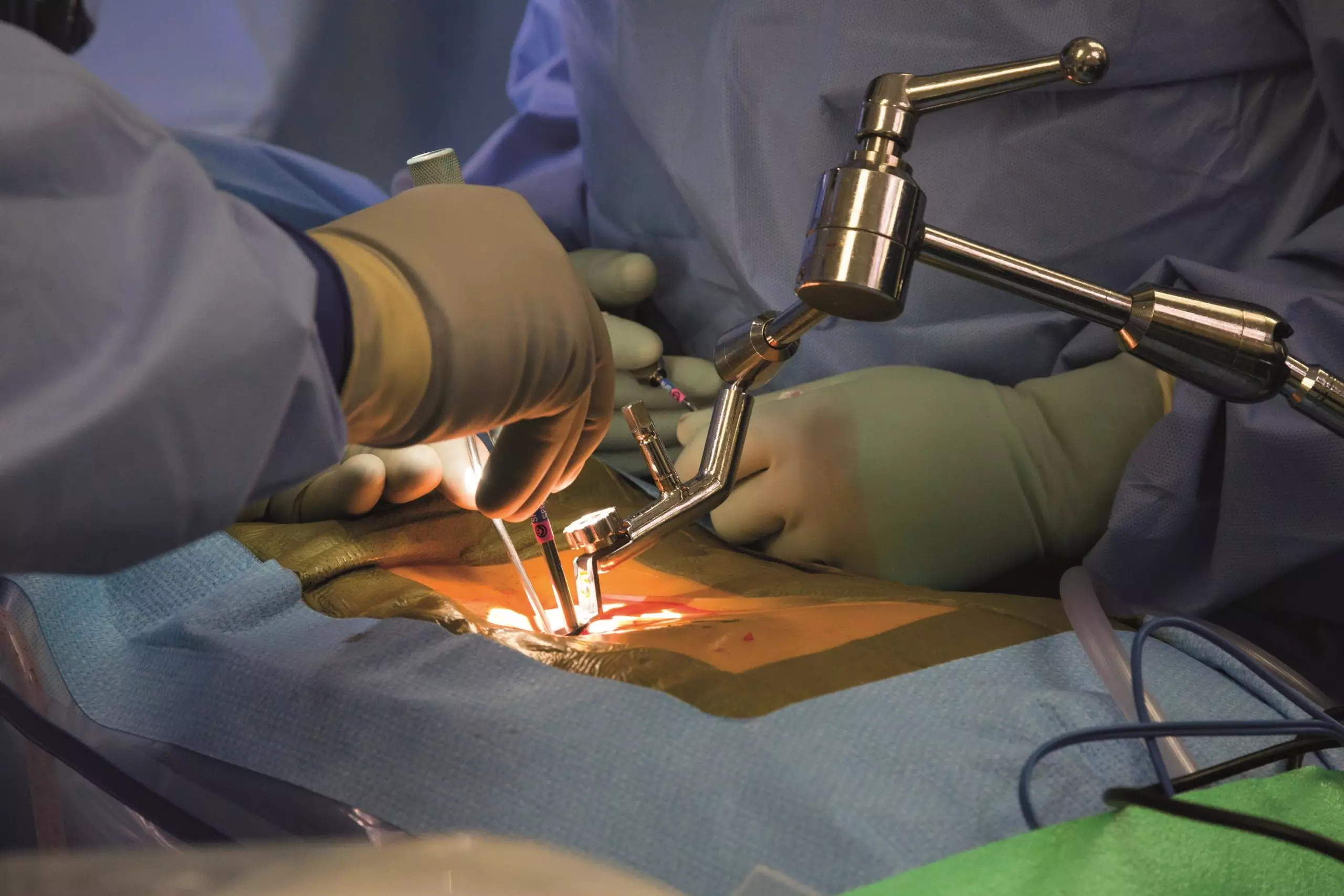
Surgery may be recommended to address certain spinal conditions when nonsurgical treatments are ineffective or when symptoms require surgical intervention. Different approaches are available depending on the condition and the patient’s individual needs. Here is more information on the different approaches to spine surgery:
Spinal Decompression Surgery
Decompression spine surgery removes tissue that presses on the spinal cord or nerves; this pressure often causes pain, numbness, or weakness. Surgeons perform it when a herniated disc, bone spur, or thickened ligament crowds the nerve pathways. The goal is to create more space so the nerves can function without obstruction. Here are some key techniques that fall under the decompression category:
- Laminectomy: This removes part of the bony arch of a vertebra to widen the spinal canal.
- Discectomy: This takes out the portion of a herniated disc that pushes against a nerve.
- Foraminotomy: This enlarges the opening where nerve roots exit the spine.
Spinal Fusion
Spinal fusion is a spine surgery that joins two or more vertebrae into a single unit, and it stops movement between the bones that cause pain. Surgeons use it when instability, fractures, or worn discs let the vertebrae shift too much. The fused segment no longer bends, which reduces the friction that irritates surrounding nerves.
During the procedure, the surgeon places bone graft material between the affected vertebrae, and the bones gradually grow together over several months. Metal plates, screws, or rods often hold the segment in place while the fusion sets. This hardware supports the spine, and it stays in the body permanently in most cases.
Artificial Disc Replacement
Artificial disc replacement removes a damaged disc and replaces it with an artificial one. This spine surgery aims to keep the natural movement that fusion eliminates. Surgeons often recommend this approach for patients with a single degenerated disc and otherwise healthy vertebrae, and the artificial disc mimics the original’s flexibility.
This method appeals to patients who want to maintain a full range of motion, and it may reduce stress on nearby discs that fusion sometimes increases. Not everyone qualifies; the surgeon checks for factors like bone strength and the number of affected discs. Your evaluation determines whether this option fits your condition.
Corrective Spinal Surgery
Some conditions change the spine’s natural curve or alignment, and spine surgery can restore a balanced structure. This group includes scoliosis, kyphosis, and certain degenerative changes. Correcting the alignment can relieve pressure, improve posture, and ease strain on muscles and nerves. Surgeons use different tools and techniques to reshape and stabilize the spine, and the plan depends on the curve’s severity and location. Here are a few factors that influence how a surgeon approaches deformity correction:
- Curve severity: Larger curves may require more extensive correction and hardware.
- Patient age: Growth and bone quality influence the timing and method.
- Symptom impact: Pain, nerve pressure, and mobility limits guide the urgency.
Schedule Your Spine Surgery Appointment
Spinal surgery includes several distinct approaches, each targeting a different structural problem. Problems surgery addresses include nerve compression, instability, disc damage, and misalignment. Understanding your options helps you have a focused conversation with a surgeon. Contact a qualified neurosurgeon near you to schedule your spine surgery appointment today.
