


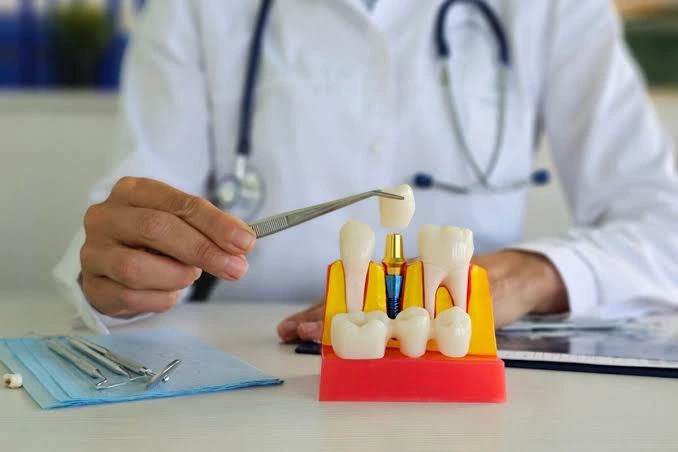
A dental implant is a small titanium post that a dentist places into the jawbone to replace a missing tooth root. Once healed, it supports a crown, bridge, or denture that restores your ability to chew and speak effectively. A dentist may recommend an implant when you have lost a tooth to decay or injury, and you want a stable, long-lasting replacement. Here’s information on understanding the long-term care requirements of dental implants:
Placing the Implant
Placing the dental implant post is the first appointment step in this restoration. Your dentist or oral surgeon begins by numbing the area with a local anesthetic, then makes a small incision in the gum to expose the jawbone. They drill a precise channel into the bone and position the titanium post within it. After placement, the bone gradually bonds with the dental implants surface through a process called osseointegration. During osseointegration, living bone cells grow around and fuse to the titanium, anchoring the post firmly in place. This biological bond gives the implant the stability needed to hold a restoration.
Healing and Integrating
The initial surgery is often completed in one to two hours, though the full osseointegration process typically takes three to six months. The months following surgery matter because osseointegration determines how well the implant settles into the jaw. You can support your body during this period by following your dentist’s instructions closely, and consistent daily habits help contribute to a smoother recovery.
Maintaining Oral Hygiene
Keeping the surgical site clean reduces the risk of complications. Brush gently around the area, rinse as directed, and avoid disturbing the implant site while it heals. Attend all follow-up appointments so your dentist can monitor how the bone is bonding with the post. When any issues or complications arise, contact your medical team promptly for timely advice.
Supporting Your Overall Health
Eating soft, nutrient-rich foods, staying hydrated, and getting adequate rest give your body the resources it needs. Many dentists advise avoiding tobacco during this stage, since smoking can slow healing and interfere with integration. Managing conditions like diabetes with your physician may further support a stable recovery. Making steady healthy choices can support your recovery, and implants stimulate the jawbone, helping it stay strong.
Getting the Final Restoration
Once your dentist confirms that osseointegration is complete, you move to the restorative phase of treatment. The dentist attaches a small connector called an abutment to the top of the implant, which sits just above the gumline. In some cases, a short additional healing period allows the gum tissue to shape around the abutment. Your dentist then takes impressions of your mouth to create a custom crown, bridge, or denture that matches the size, shape, and color of your natural teeth.
When the restoration is ready, the dentist secures it to the abutment and checks your bite for a comfortable fit. This final piece is what you see and use when you chew, and it completes the transformation from empty space to functional tooth. At this point, the implant functions much like a natural tooth. You care for it with regular brushing, flossing, and routine dental visits. With proper maintenance, an implant can serve you for many years, though your dentist is the best source for medical advice about your individual situation.
Prepare for Your Dental Implants
The implant process moves through placement, healing, and restoration, with osseointegration serving as the foundation that holds everything together. Each phase requires attention to your dentist’s directions and steady care during and after recovery to support your results. If you need an implant, schedule a consultation to discuss your dental history, jawbone condition, and goals. A dentist can evaluate whether an implant suits your needs and explain the timeline specific to your case. Preparing ahead of time gives you a clear picture of the commitment involved and helps you plan ahead.
